Saturday, November 3, 2012

A Kaleidoscope of Fulmar Plumages

Northern Fulmar
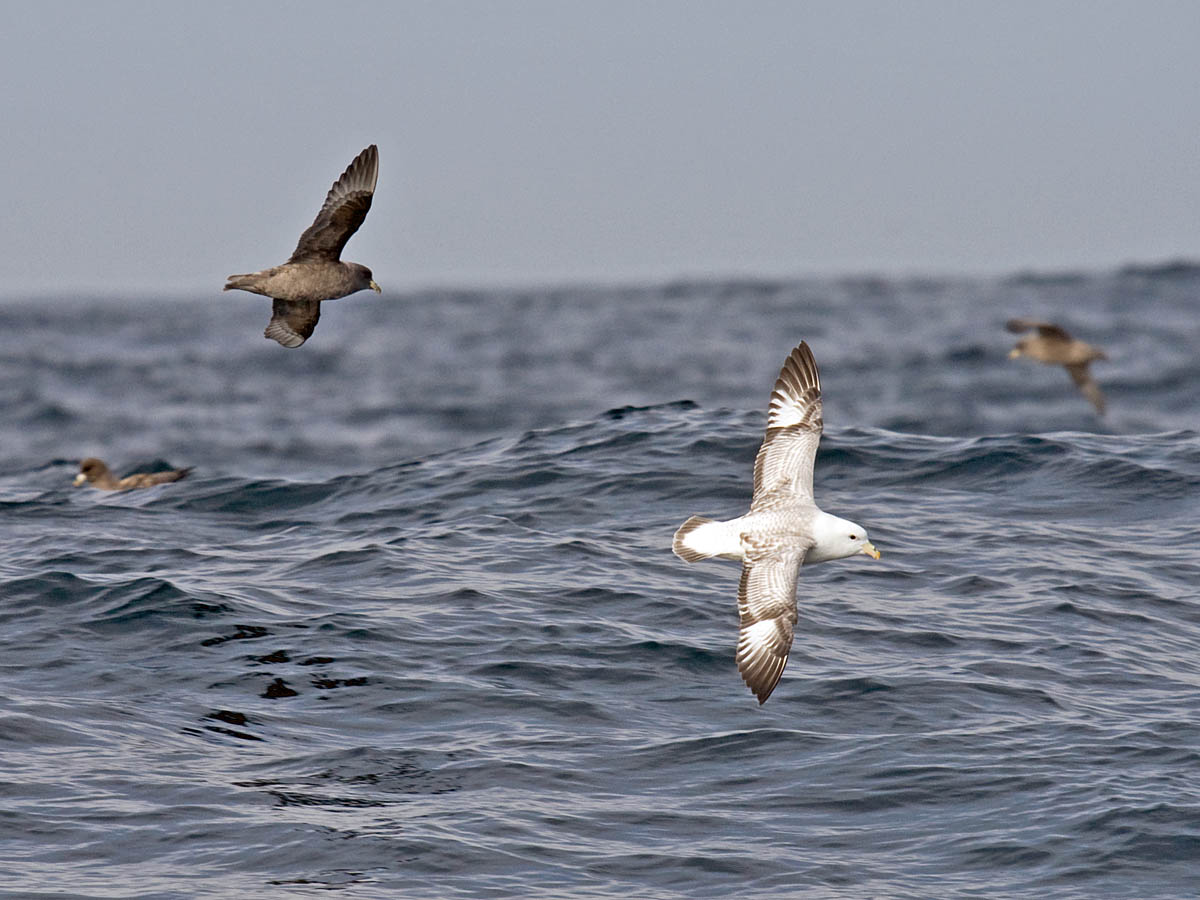
Dark and light phase Northern Fulmars. Click for larger view.
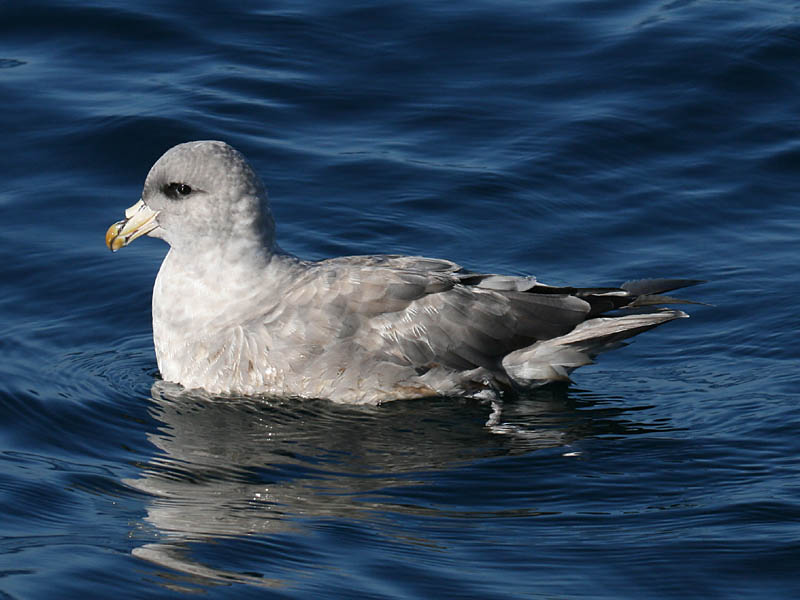
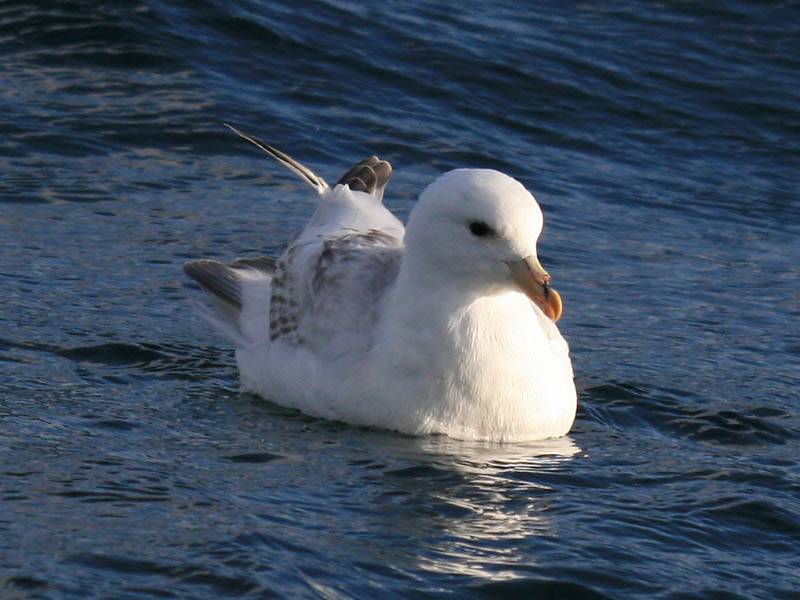
Northern Fulmars come in a variety of colors and patterns--from dark blackish-brown to various shades of gray, bluish, tan, yellowish, and white,... patterned light, dark, speckled, checkerboard, and plaid (but not yet seen in a barber pole pattern).

On the West Coast, the majority of fulmars are dark phase. These birds are pretty much all dark except for pink feet and thick yellow bill. Many of the birds are dark sooty gray. Older feathers become brownish. Darkest examples can suggest Flesh-footed Shearwaters with their dark chocolate-brown plumage and pale bill. Shearwaters, however, have longer wings, tail, neck, and bill. See the next 3 photos for examples of the darkest birds.

Northern Fulmar
Click to view how some hold their feet above their tail!

Northern Fulmar
Fulmar pretending to be some other all-dark petrel or shearwater!

Northern Fulmar

The vast majority of birds nesting in the Aleutians are dark phase. In contrast, most of the birds on the Siberian side of the Pacific are light phase.

Most birds aren't as dark as that shown above. Many are just plain gray or pattened with new darker gray feathers replacing worn and faded browner feathers as the 2 photos below show.

Northern Fulmar
Note faded brown outer primaries contrasting with new gray ones.
Click for larger view.

Northern Fulmar

Slightly paler, birds such as those in the next 2 photos are a bit paler gray-brown on the body plumage with darker wings. During molt they can be very blotchy and oddly patterned. Older feathers tend to tan, or even with a yellowish cast.

Northern Fulmar
First year bird with relatively fresh flight feathers.

Northern Fulmar
Very worn wings (note feather shafts without barbs on wing).
Atlantic Northern Fulmars have light and dark phases, but none are as extreme--at either end of the spectrum--as Pacific birds. Pacific Fulmars have thinner bills and dark tails rather than white in Atlantic birds.

The birds in the next two photos appear as many do in the Atlantic, gray back and wings and white body (though with dark tails in the Pacific). On the West Coast, however, fewer seem show the strong upper wing pattern as the following bird. The paler the bird, the more strongly the white wing patches seem to contrast.
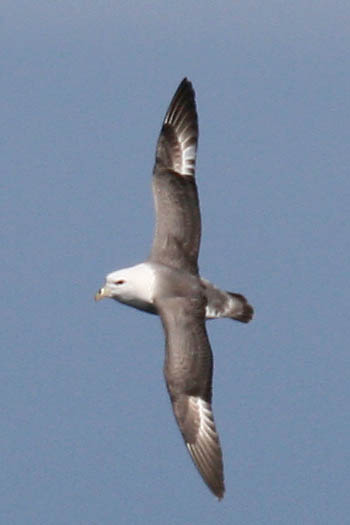
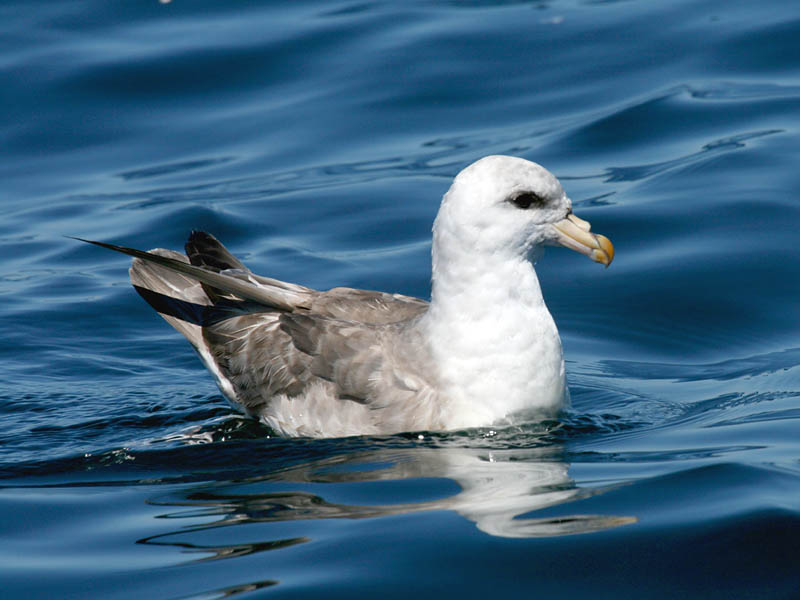
Northern Fulmar

Northern Fulmar

Especially in winter and spring there are many lighter phased individuals on the West Coast. Few get as white as the birds below, with all white body plumage including most of the back.

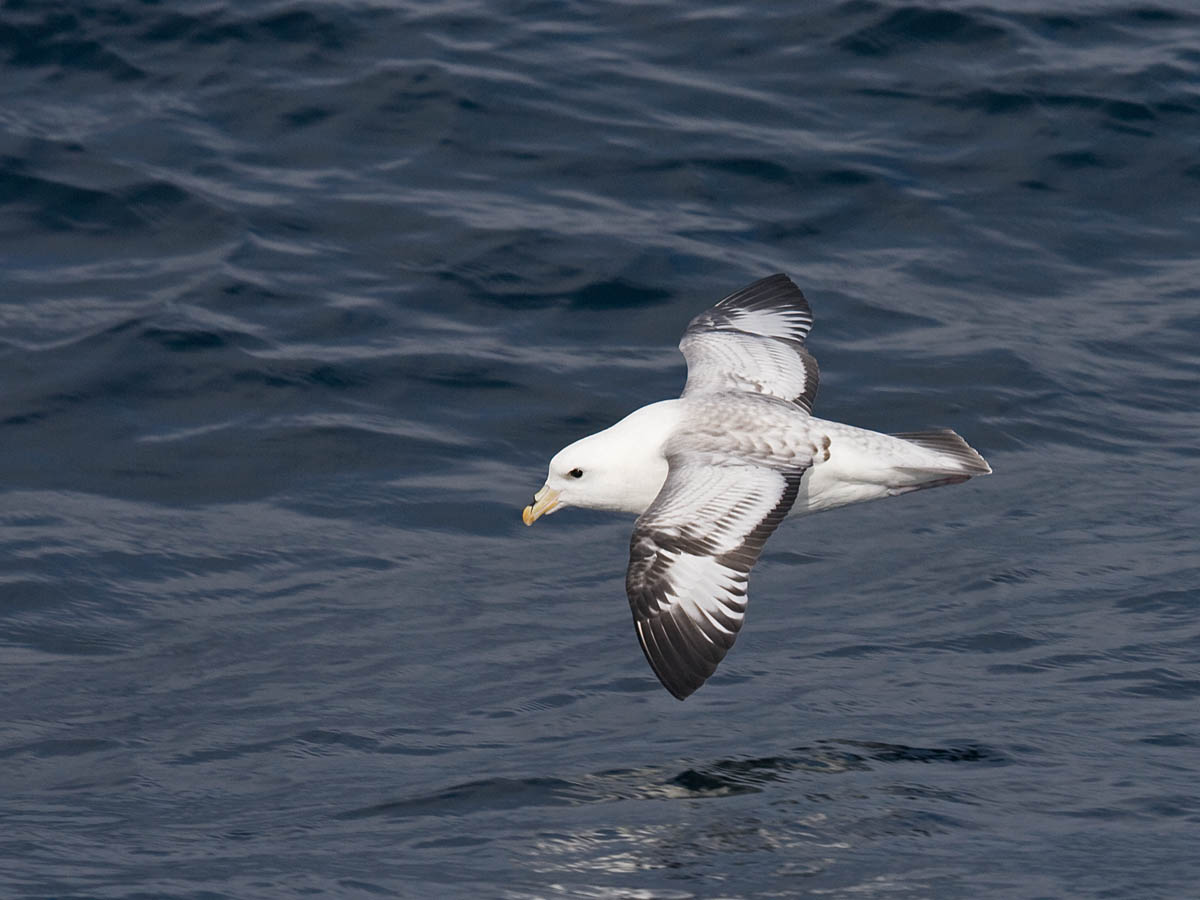
Northern Fulmar light phase

Northern Fulmar light phase

Northern Fulmar light phase

Northern Fulmar

Wednesday, October 10, 2012

Oregon rare bird: Brown Booby: October 6, 2012

Brown Booby
Brown Booby. Photo by Noah Strycker.
On last weekend's pelagic trip from Newport, Oregon, Russ Namitz spotted a female Brown Booby about 1/2 mile in front of the boat. Noah Strycker got the above photo. Unfortunately, it was quickly a mile away before many in the stern could spot it, and then it was no longer identifiable with binoculars. We were NW of Newport, about 20 miles W of Depoe Bay. (Trip report.)

This is the 5th accepted Oregon record. Here are the previous Accepted records from the Oregon Bird Records Committee.

  • October 3, 1998. 15 miles WSW of Depoe Bay, Lincoln Co. Juvenile. 6 written rare bird reports. (Almost exactly where we saw this bird above, on the same weekend, 14 years earlier!)
  • May 2005. Off Tillamook and Lincoln Cos. Photo.
  • October 26, 2008. Dead on beach. Cape Arago, Coos Co.
  • October 28 to December 8, 2009. Coos Bay, Coos Co. Many photos. Here, and here.
There are three additional reports, not submitted to the OBRC.
July 25, 2005. 20 miles W Winchester Bay, Douglas Co. (2nd hand report)
July 25, 2005. On beach at Seaside, Clatsop Co. (2nd hand report)
November 22, 2009. Seen from Boiler Bay, Lincoln Co. (Good description)


Oregon Bird Records Committee pdf of Accepted records through April 2012.

Wednesday, September 19, 2012

Scripps's Murrelet

Scripps's Murrelet
Scripps's Murrelet. 20 miles off Newport, Oregon, September 15, 2012.

This past weekend our pelagic trip enjoyed calm seas. The trip generally had low numbers of birds and was mostly unremarkable until... we were able to circle the boat around a pair of these rare birds.

Just this past August the A.O.U. split this murrelet that breeds off southern California from those breeding off Baja. (See the previous post Scripps's and Guadalupe Murrelet.)

This bird is no longer on the Review list of Oregon rare birds. It was removed in 2010. Nevertheless, it is hard to find since it usually stays far offshore. We've seen this species on about 15% of trips, July-October. We would see it far more often if the seas were as smooth as last weekend, but that is usually not the case.

From a show of hands at the time, this was a life bird for nearly all on board except the guides!

You may be interested in our trip report from last weekend.